




On a typical day there are more things to focus on than you really have the capacity think about. Yet, that’s your job. The structures of collaboration that critical infrastructure typically operates in are common across large-scale industry yet archaic in efficiency and lack overall effectiveness. Despite this, none are the wiser when the day to day bounces them around like a toy sailboat in a wavy ocean.
Mainstream data center news only ever covers the macro: power availability, power density, AI demand, etc. What about the challenges, opportunities and trends happening on the ground level? Where design, engineering, construction and operations teams get the real work done. These are the day to day activities that happen across dozens of data center teams. This is the cross-organizational ecosystem where thousands of micro decisions and actions across hundreds of cross-functional stakeholders ultimately design and build the digital infrastructure our world depends on.
On the ground level, very talented individuals work through meticulous tasks, duplicative efforts and are constantly reacting. These daily circumstances are inherently ‘part of the job’ and have always been there. In some ways they’ve multiplied. In other ways they’ve shifted. They are pervasive across teams, vendors, processes and every hyperscale build that turns over. And they’re not unique to the data center industry. Look within any complex operations initiative and you will likely find the very same circumstances.
Ask your design and engineering teams. What are you spending most of your time on? They’ll likely tell you this project or that issue or this component or that system. Ask again. Go a layer deeper. Ask them how much of their focus is directly spent on designing and engineering. Ask them about the last time they were able to be really creative? They may look at you a little crazy.
“Gartner research shows 78% of organizational leaders report experiencing what we call collaboration drag.” — Harvard Business Review (HBR), Why Cross-Functional Collaboration Stalls, and How to Fix It
Data center teams run countless cross-functional complex initiatives simultaneously. But you know this already. HBR reports the impacts of what they call “collaboration drag” in complex, multi-initiative operations result from “too many meetings, too much peer feedback, unclear decision-making authority, and too much time spent getting buy-in from stakeholders.” Sound familiar?
Friction from these typical activities often stems from lack of clarity, which is paramount for critical decision-making. Otherwise, it stems from fear, for either making the wrong decision or having to sign up for new workloads people just don’t have the capacity for. In the same article, researchers found when drag is high, organizations are 37% less likely to achieve initial targets, “failing at the very things their lofty cross-functional agendas are meant to achieve.” For data center teams, this could mean pushing out schedules, adding to hidden costs or realizing new risks.
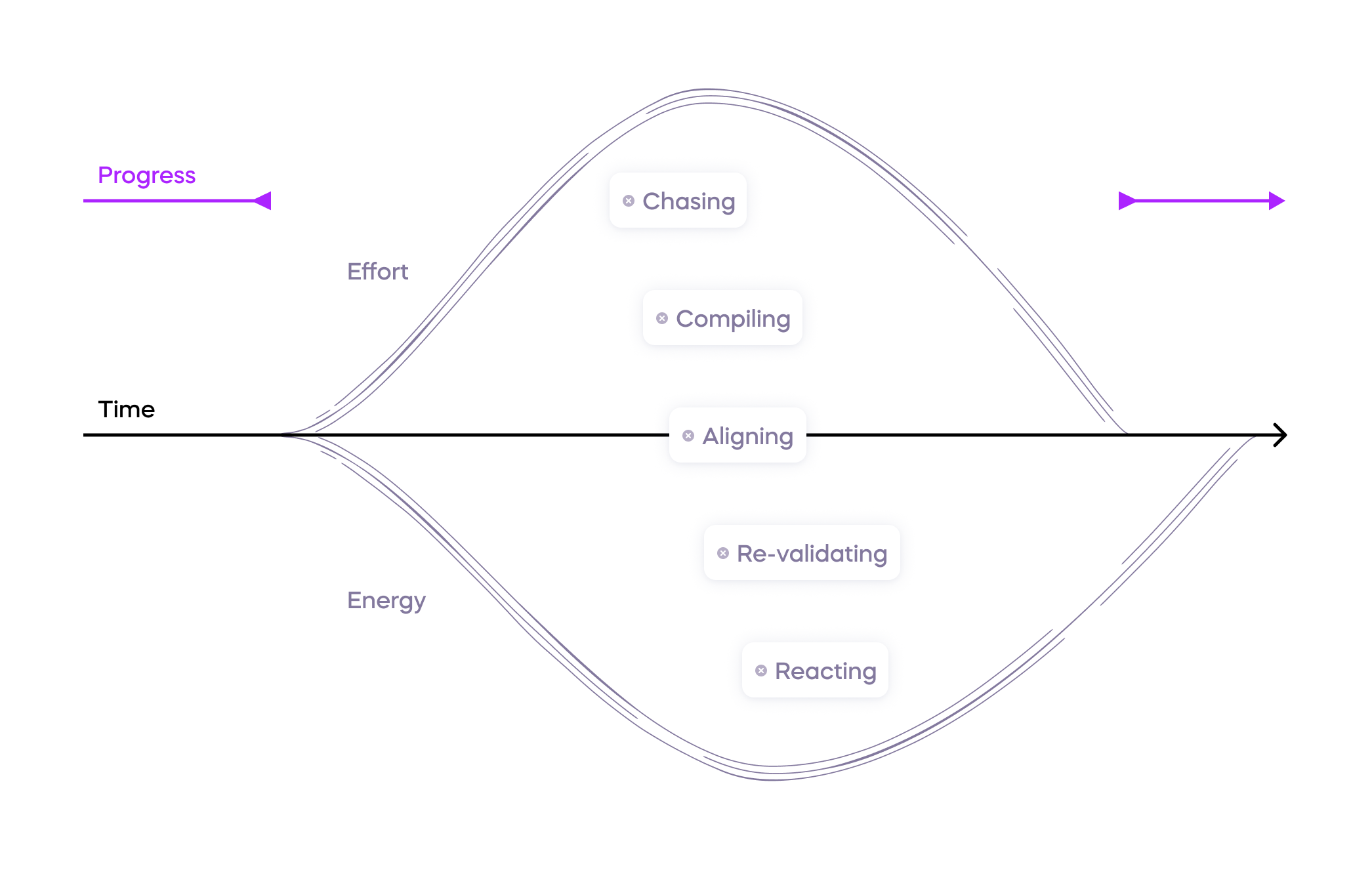
What consumes the primary focus of high-value teams is very likely not what you, your executive leaders or your organizations want it to be. And while they most certainly are high-performing, data center teams regularly spend most of their daily effort chasing down information, compiling context, aligning stakeholders, re-validating details or reacting to issues that never should be happening in the first place. Does any of this sound like creative design work or engineering innovation?
In the age of rapid growth and way-too-much information, demand for perfect outcomes has highly contributed to these repetitive, demanding and draining activities which have simply become the norm. Inefficiencies are usually symptoms. Very often they stem from a lack of effectiveness. As teams simply try to get through each day, these conditions live in plain sight. For some reason they continue to be incredibly common across complex operations, hyperscale builds and large-scale cross-functional projects. Some will say that’s just how business works. But is that how you want your business to work? Is that how you want your teams investing their energy?
What if you looked at this from a different perspective? Frame these drains on teams as operational challenges. Just like you would any other issue you experience in the world of mission critical operations. And how do you treat those? You root cause and implement corrective actions, of course! Come on now! Solving issues in isolation helps, but you know that’s not an effective corrective action.
“The most dangerous phrase in the language is, ‘We’ve always done it this way.’” — Grace Hopper, U.S. Navy Rear Admiral
Follow the long and winding roads, with many stops and backwards tracks along the way. Understand the commonalities. Find the patterns. You will gain new perspective on the level of effort it takes your teams just to make a simple decision or take straightforward action. You solve the biggest infrastructure challenges in the world, surely you can solve these.